

Its habitats in Extremadura
This species is traditionally associated with Holm Oak wood pastures (Dehesas), since acorns are one of its staple foods during the winter.
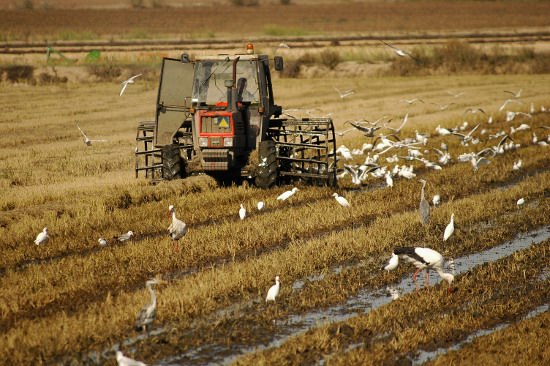
This species is traditionally associated with Holm Oak wood pastures (Dehesas), since acorns are one of its staple foods during the winter. In fact, almost all of the existing core wintering sites in Extremadura include, to a greater or lesser extent, areas of wood pasture, but they can also be established in cereal growing areas (barley, wheat and oats) or grazing lands with scattered trees. Rice and corn fields are used intensively by cranes in winter, given that by the time they arrive in Extremadura they have already been harvested and they take advantage of the supply of food which the stubble fields provide and where they can easily find remains of seeds.
The communal roosts are located for the most part in reservoirs near the feeding sites, seeking preferably shallow waters in areas situated at reservoir tails, with wide banks and good visibility to guard against predators or possible disturbances. Some of the most important roosts are established in rice fields once they have been puddled (ploughed after the harvest), as they have a shallow sheet of water. On other occasions they use livestock water holes or even riverbanks. Occasionally they sleep at a distance from water.