

The Common Crane in Extremadura
The Common Crane in Extremadura
- Common Crane Festival
- The Common Crane
- The Common Crane in Extremadura
The Common Crane in Extremadura

Common Cranes in Extremadura
Extremadura can be considered as the main wintering destination of those European Cranes who migrate taking the westerly route, hosting birds from Germany, Sweden, Finland, Norway and Estonia, as well as the rest of the countries which surround the Baltic Sea and even from the most westerly areas of Russia.

Conservation
The Common Crane is included in Extremadura's Regional Catalogue of Threatened Species (Decree 37/2001) in the "special interest" category and has therefore a "Management Plan"
Description of the species
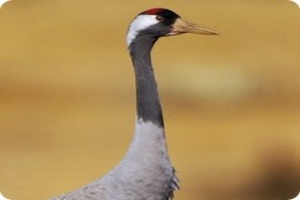
A large bird with an elegant silhouette, long neck and legs and a greyish plumage. The adult has a black head, with a patch of bare red skin on the crown and a white stripe which extends from below the eye down to the nape of the neck.

Feeding
Its diet depends on the resources available in the habitats where it feeds. Thus, in wood pastures they mainly eat Holm Oak acorns, in unirrigated cereal fields, wheat, barley and oat seeds, while in irrigated stubble fields they look for rice and corn seeds.

Its habitats in Extremadura
This species is traditionally associated with Holm Oak wood pastures (Dehesas), since acorns are one of its staple foods during the winter.
Migratory routes and population
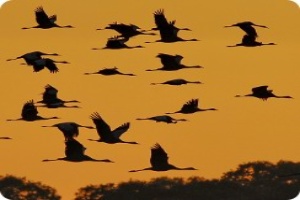
Extremadura may be considered as the main wintering destination of those European Cranes who migrate following the westerly route, hosting birds from Germany, Sweden, Finland, Norway and Estonia, as well as the rest of the countries which surround the Baltic Sea and even from the most westerly areas of Russia.

Phenology of the Common Crane in Extremadura
The arrival of cranes comes mainly during the second fortnight of October, steadily increasing in numbers until reaching maximum population numbers between December and January.

Winter behaviour of the Common Crane
Common Cranes keep to very strict routines, going to the feeding areas during the day and flying at the end of the day to the communal roosts, where thousands of birds may gather.